Creating a professional landing page can take time, especially when you need to write persuasive copy, choose a suitable design, add lead capture forms, and make sure everything works on mobile devices. For business owners, marketers, bloggers, coaches, and affiliate marketers, building pages quickly without sacrificing quality can make a real difference.
Leadpages AI is a useful topic for anyone exploring faster ways to create landing pages and generate leads online. Leadpages combines landing page templates, a visual page editor, lead generation tools, and conversion-focused features to help users build pages without needing advanced coding skills.
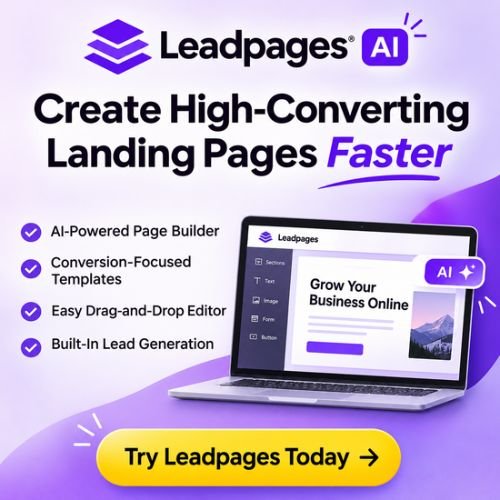
In this Leadpages AI Review, we look at how the platform can help you create professional landing pages faster, which features are worth considering, how to use them effectively, and what to know before choosing a plan. We will also cover its advantages, limitations, ideal users, and practical tips for creating pages that encourage visitors to take action.
Note: Leadpages is the platform being reviewed. The term “Leadpages AI” is used here as a search topic, not as a claim that every Leadpages feature is powered by artificial intelligence. Available tools and plan features can change, so check the official website for the latest details.
What Is Leadpages AI?
Leadpages is a landing page and lead generation platform designed to help businesses create web pages that encourage visitors to complete a specific action. That action could be joining an email list, requesting a consultation, registering for a webinar, downloading a guide, or purchasing a product.
When people search for Leadpages AI, they are often looking for ways to use modern page-building tools to reduce the time required to create a landing page. The Leadpages platform supports this goal through ready-made templates, a visual editor, forms, and conversion-focused features.
Traditional website development can require coding knowledge, design experience, and several different tools. A landing page builder simplifies much of this process by bringing important features into one platform. Users can select a template, customize its content, add forms, and publish a page without building everything from scratch.
For small businesses and independent creators, this can be especially useful. Instead of spending days developing a campaign page, users can focus on their offer, audience, and marketing message.
Why Use Leadpages to Create Professional Landing Pages?
A landing page should do more than look attractive. It should explain an offer clearly, build trust, and guide visitors toward one main action. Leadpages provides tools that can help users create pages around these goals.
1. Save Time With Ready-Made Templates
Starting with a blank page can make website design more difficult than necessary. You need to decide where the headline should go, how much space to leave between sections, which images to use, and where to position the call-to-action button.
Leadpages offers templates that give users a starting structure. You can choose a design that matches your campaign and customize the text, images, colors, sections, and forms.
For example, a fitness coach promoting an online training program may select a template with a headline area, program benefits, testimonials, and a registration form. A software company may choose a layout that introduces its product, highlights important features, and encourages visitors to start a trial.
Using a template can reduce design work and help maintain a consistent page structure. However, the template should always be customized to match your brand and offer.
2. Build Pages Without Advanced Coding
Not every marketer knows HTML, CSS, or JavaScript. Leadpages is designed to make landing page creation accessible through a visual editing experience.
Users can work with page elements and customize their layout without manually writing code for every section. This makes the platform useful for entrepreneurs, bloggers, consultants, and small business teams that want to manage campaign pages independently.
You can focus on the content and appearance of your page instead of handling every technical detail. This can also make it easier to update a campaign when your offer, pricing, or marketing message changes.
Although a visual editor makes the process easier, users should still preview the finished page carefully. Check how the page looks on different screen sizes and make sure every button and form works as expected.
3. Create Pages Around Specific Campaign Goals
A landing page usually performs best when it has one clear purpose. Sending visitors to a general homepage can sometimes make it harder for them to understand what action they should take.
With Leadpages, you can create separate pages for different campaigns. For example, an online course business might use one page for a free webinar, another for a downloadable guide, and a third for a paid course.
This approach allows you to match the page message with the advertisement, email, or social media post that brings visitors to it.
When someone clicks an advertisement about a free marketing guide, the landing page should immediately explain how to receive that guide. Keeping the message consistent can reduce confusion and create a smoother visitor experience.
4. Support Lead Generation
Lead generation is one of the main reasons businesses create landing pages. Instead of asking visitors to browse an entire website, a dedicated page can encourage them to submit their contact information.
Leadpages provides lead capture tools that can be used for actions such as newsletter subscriptions, consultation requests, and content downloads.
A simple lead generation page might include:
- A clear headline explaining the offer.
- A short description of its benefits.
- A relevant image or product preview.
- A form requesting necessary information.
- A visible call-to-action button.
- A short privacy statement where appropriate.
Keep forms simple. If you only need an email address to deliver a free guide, avoid requesting a long list of personal details. A shorter form can make the process easier for visitors.
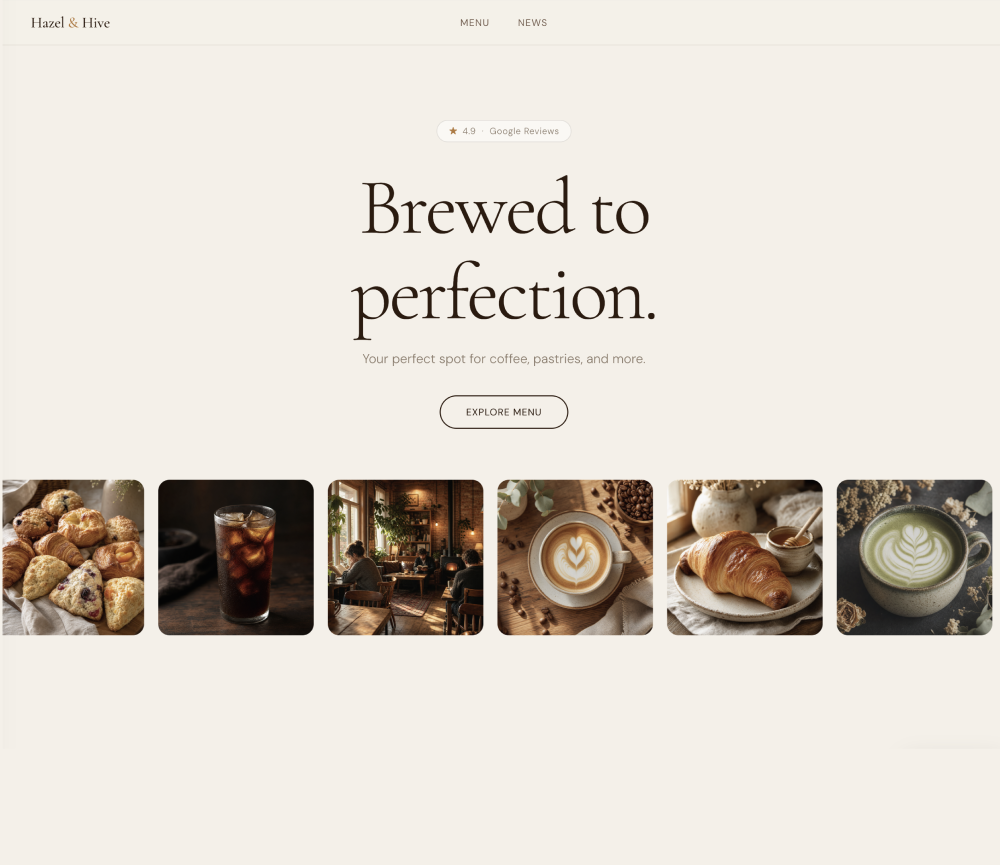
Important Leadpages Features to Consider
The value of a landing page builder depends on the tools it provides and how well those tools support your marketing goals. Here are some important Leadpages capabilities to evaluate.
Visual Landing Page Editor
A visual editor allows users to customize the structure and appearance of a landing page. You can work on headlines, text, images, buttons, forms, and other page sections.
This is helpful when you want to create a page that reflects your brand instead of using a template exactly as it appears. You can adjust the content to suit your audience and campaign.
For example, a digital marketing agency may use its brand colors, service descriptions, and client-focused messaging to create a professional consultation page.
Conversion-Focused Templates
Templates can help users build pages with a clear content structure. Many landing page layouts include areas for headlines, benefits, images, forms, and calls to action.
A well-designed template can provide a useful starting point, but it does not guarantee conversions. Your results will also depend on the quality of your offer, audience targeting, copywriting, page speed, and overall user experience.
Before selecting a template, consider what visitors need to understand before taking action. Choose a layout that makes that information easy to find.
Lead Capture Forms
Forms allow visitors to share information with your business. Depending on your campaign, you may ask for an email address, name, phone number, or other relevant details.
Use forms carefully. Asking for unnecessary information can create friction and reduce the likelihood that someone will complete the form.
A newsletter signup page may only need an email field. A consultation request page may require a name, email address, and a short description of the visitor’s needs.
Always explain how submitted information will be used and follow the privacy requirements that apply to your business and audience.
A/B Testing
A/B testing helps marketers compare different versions of a page to understand which one performs better.
For example, you could test two headlines:
- Version A: Build Your Website Without Coding
- Version B: Launch Your Professional Website Faster
You could also compare button text, page layouts, images, or form placement.
The important point is to test one meaningful change at a time whenever possible. If you change the headline, image, button, and layout simultaneously, it becomes difficult to identify which change influenced the result.
A/B testing requires enough traffic to produce useful evidence. Avoid making major decisions based on a very small number of visitors.
Mobile-Friendly Page Design
Many people visit websites through smartphones and tablets. A landing page that looks attractive on a desktop but is difficult to use on a mobile device can create a poor experience.
Check the mobile version of your page before publishing. Headlines should be readable, images should fit the screen, buttons should be easy to tap, and forms should not require unnecessary scrolling.
Pay special attention to the first screen visitors see. Your main message and primary call to action should be easy to understand without making users search through the page.
Marketing Integrations
Landing pages often work alongside email marketing platforms, analytics tools, payment systems, and customer management software.
Integrations can help connect the page with the rest of your marketing process. For example, a visitor who submits a newsletter form may be added to an email marketing workflow, depending on your connected tools and settings.
Before choosing a plan, review the integrations you need. Check whether your preferred service is supported and whether the integration is available on the plan you intend to purchase.
How to Create a Landing Page With Leadpages AI
One of the most useful parts of the current Leadpages platform is its AI page builder. Instead of starting with a blank design, you can describe the page you want in everyday language. The AI builder can then generate a page structure, copy, images, and styling that you can edit before publishing. Leadpages Knowledge Base+1
Here is a practical process for creating a professional landing page.
Step 1: Define Your Landing Page Goal
Before opening the builder, decide what you want visitors to do. A page designed to collect email subscribers will need a different structure from a page selling an online course or promoting a software product.
Write down your primary goal. It could be collecting leads, selling a product, booking appointments, promoting a webinar, or encouraging visitors to request a quote.
A clear goal makes it easier to choose the right page layout and write a focused prompt.
Step 2: Write a Clear AI Prompt
Open the AI page builder and describe the page you want to create. Include your business type, target audience, offer, preferred design style, and important sections.
For example, if you run a digital marketing agency, your prompt could be:
Create a professional landing page for a digital marketing agency offering SEO, Google Ads, and social media marketing services. Include a strong headline, service benefits, client testimonials, a lead generation form, and a consultation button. Use a modern design with clear sections and a professional tone.
A specific prompt gives the AI more useful direction than a short instruction such as “make a business landing page.”
Leadpages also supports editing the generated page with AI chat, allowing you to request changes to individual elements or ask for additional sections. Leadpages Knowledge Base
Step 3: Review the Generated Design
Once the AI creates the page, review the layout carefully. Check whether the headline communicates your offer, whether the sections appear in a logical order, and whether the images support your message.
AI-generated content is a starting point, not a finished marketing strategy. Replace generic statements with accurate information about your business, product, or service.
Step 4: Customize Your Brand
Your landing page should look consistent with the rest of your business. Update the colors, fonts, logo, images, and button styles to match your brand identity.
If you use a Brand Kit, Leadpages can apply saved brand elements during page generation. This can help maintain a consistent appearance across different campaigns. Leadpages Knowledge Base
Step 5: Add Your Lead Capture Form
Add a form that supports your campaign goal. For an email newsletter, an email address may be enough. For a consultation request, you may need a name, email address, and a short message.
Keep the form easy to complete. Explain what visitors will receive after submitting it, and make sure your privacy information is clear.
Step 6: Improve the Call to Action
A call-to-action button tells visitors what to do next. Use specific wording that describes the benefit or action.
Examples include:
- Get My Free Guide
- Book a Free Consultation
- Start Your Free Trial
- Register for the Webinar
- Request a Personal Quote
Place the main button where visitors can easily see it. You can repeat it further down the page when the page is long, but keep the action consistent.
Step 7: Preview and Publish
Before publishing, check the desktop and mobile versions. Test every button, form, link, and integration. Review spelling, pricing, product details, and contact information.
Once everything is working correctly, connect your domain or use the publishing option available in your account. Leadpages’ getting-started documentation outlines AI generation, visual editing, and publishing as ways to create your first page. Leadpages Knowledge Base

How Leadpages AI Can Help Improve Landing Page Conversions
Creating a page quickly is useful, but the bigger goal is to turn relevant visitors into leads or customers. Leadpages includes tools that can help marketers evaluate page performance and improve their campaigns.
Match Your Landing Page With Your Advertisements
When you run Google Ads, Facebook Ads, or another paid campaign, your landing page should match the promise made in the advertisement.
For example, if your ad promotes a free SEO audit, the landing page should clearly explain the audit and provide a simple way to request it. Sending visitors to an unrelated homepage can create confusion.
Leadpages supports Dynamic Text Replacement, which can adjust landing page text to match relevant advertising keywords and campaign parameters. This can help create a closer connection between the advertisement and the page visitors see. Leadpages – Leadpages+1
Test Different Headlines and Page Elements
Your first landing page version may not produce the results you expect. A/B testing allows you to compare different versions and measure which one achieves your selected conversion goal.
You might test a headline that focuses on saving time against another that focuses on increasing sales. You can also compare button text, images, page layouts, and form placement.
Leadpages documents manual A/B testing and AI-based Smart Traffic features. The availability of particular optimization tools depends on the subscription plan. Leadpages Knowledge Base+1
Use Data to Understand Visitor Behaviour
Analytics can help you understand whether visitors are viewing your page, clicking buttons, and completing forms. Heatmaps can provide additional insight into where people click and how far they scroll.
These insights can help identify potential problems. For example, visitors may be leaving before reaching an important offer, or they may be overlooking a button placed too far down the page.
Use this information to make practical improvements rather than changing your design based only on personal preference.
Create Separate Pages for Different Audiences
A single landing page may not communicate effectively with every audience. A small business owner, an online store manager, and a marketing agency may have different needs, even if they are interested in the same service.
Creating separate campaign pages allows you to adjust the headline, benefits, examples, and call to action for each audience.
This can make your marketing message more relevant and help visitors understand why your offer is suitable for them.
Leadpages AI Pricing: What Should You Consider?
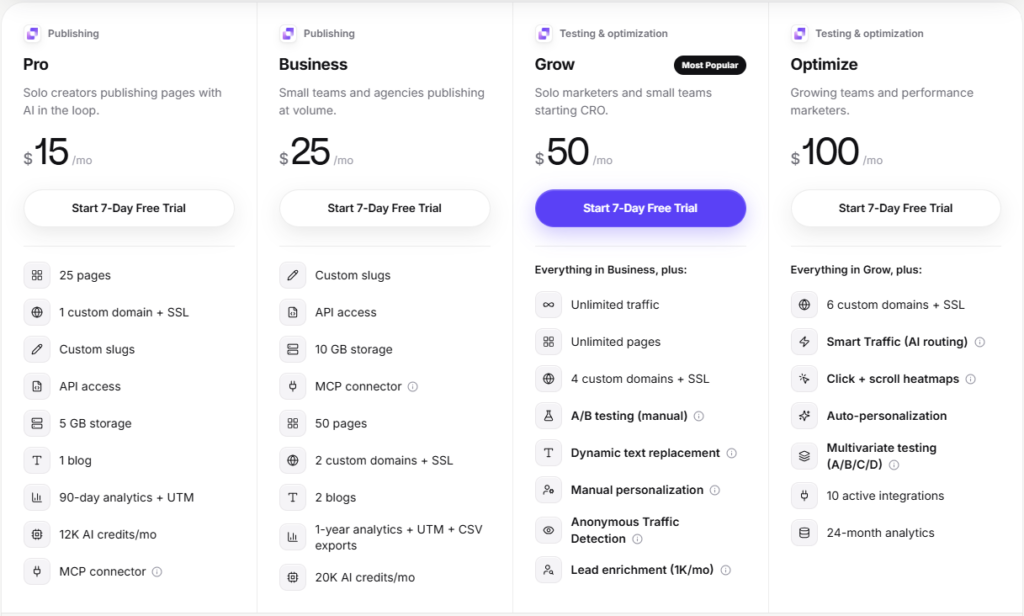
Leadpages offers paid subscription plans with different features and usage allowances. Pricing and plan inclusions can change, so check the official Leadpages pricing page before subscribing.
When comparing plans, look beyond the monthly price. Consider which tools your business actually needs.
Features Included in Your Plan
Check whether the plan includes the AI page creation allowance you need, landing page publishing, A/B testing, analytics, forms, integrations, and custom domain support.
If you plan to test different versions of your landing pages, confirm which testing features are included. Advanced optimization options, such as Smart Traffic and heatmaps, may require a higher-tier plan.
AI Generation Allowances
AI page creation may use credits or a monthly generation allowance. If you expect to create several pages every week, review the available allowance and any top-up options.
This is particularly important for agencies and marketers who manage multiple campaigns.
Custom Domains and Integrations
If you are building pages for your own business, check how many custom domains your plan supports. If you work with clients, consider whether the domain and team limits match your workflow.
Also verify that your preferred email marketing platform, CRM, analytics service, or payment tool can connect with Leadpages.
The best plan is not necessarily the most expensive one. Choose the subscription that supports your current workload and gives you room to grow without paying for features you do not need.
Leadpages AI Pros and Cons
Every landing page platform has strengths and limitations. Here is a practical overview of what to consider before using Leadpages.
Pros of Leadpages
- Faster page creation: AI-assisted generation can reduce the time spent creating a page from scratch.
- No advanced coding required: The visual editor makes it easier to customize page content and layouts.
- Ready-made templates: Templates provide starting designs for different industries and campaign types.
- Lead generation tools: Forms help collect visitor information for relevant marketing campaigns.
- Testing capabilities: A/B testing helps compare page variations and measure results.
- Optimization features: Depending on the plan, tools such as Smart Traffic and heatmaps can support conversion analysis.
- Brand customization: You can adapt page designs to match your business identity.
Cons of Leadpages
- Subscription cost: A paid plan may be a significant expense for beginners or businesses with limited budgets.
- AI output needs editing: Generated headlines, copy, images, and layouts should be reviewed before publishing.
- Plan differences: Some advanced features are available only on higher-tier plans.
- Learning required: New users may need time to understand the editor, integrations, and optimization tools.
- Results are not guaranteed: A landing page builder cannot guarantee leads, sales, or a particular conversion rate.
Who Should Use Leadpages AI?
Leadpages can be useful for people and businesses that regularly create campaign pages and want a simpler way to manage lead generation.
Small Business Owners
Small business owners can use Leadpages to promote services, collect enquiries, advertise special offers, and build email lists. A dedicated landing page can give a campaign a clear destination without requiring a complete website redesign.
Digital Marketers
Digital marketers often create different pages for different advertising campaigns. Leadpages can help them build campaign-specific pages, test variations, and connect lead forms with marketing tools.
This can be valuable when managing several offers or advertising channels at the same time.
Affiliate Marketers
Affiliate marketers can use landing pages to introduce products, explain benefits, share useful information, and guide readers toward an affiliate offer.
A good affiliate landing page should provide genuine value rather than simply sending visitors to a sales link. Include relevant product details, clear disclosures where required, and an honest explanation of the offer.
Coaches and Consultants
Coaches, trainers, and consultants can create pages for booking calls, promoting workshops, collecting enquiries, and offering downloadable resources.
A focused page can help potential clients understand the service and take the next step.
Course Creators and Online Educators
Online educators can use landing pages to promote courses, webinars, free lessons, and downloadable learning materials. A page can explain what students will learn, who the course is for, and how to register.
Lead capture forms can also support follow-up communication with people who express interest.
Tips for Creating High-Converting Pages With Leadpages AI
A professional design can attract attention, but the content and visitor experience are what encourage people to take action. Use these practical tips when creating your next landing page.
Write a Benefit-Focused Headline
Your headline should immediately explain what visitors can gain from your offer. Avoid vague statements that do not communicate a clear benefit.
For example, instead of writing “Welcome to Our Marketing Agency,” use “Grow Your Business With Data-Driven Digital Marketing.” The second headline gives visitors a better idea of what the business offers.
Keep Your Message Simple
Do not fill every section with long paragraphs. Use short descriptions, clear subheadings, and easy-to-read bullet points where appropriate.
Visitors should be able to understand your offer without reading every word on the page. Focus on the most important benefits and remove information that does not support the main goal.
Add Relevant Images
Images should support your message. A product image, service screenshot, team photograph, or relevant illustration can help visitors understand what you are offering.
Avoid using unrelated stock photos just to fill empty space. Make sure images are optimized for web performance and display properly on mobile devices.
Include Trust-Building Information
People may hesitate before submitting personal information or making a purchase. Provide useful information that helps them feel confident about your business.
Depending on your offer, this may include genuine customer reviews, clear pricing, business contact details, product demonstrations, guarantees you actually provide, and links to relevant policies.
Never publish invented testimonials or unsupported performance claims.
Make the Page Mobile-Friendly
Check the page on a smartphone before publishing. Make sure the headline is readable, the buttons are easy to tap, and the form fields are comfortable to use.
Remove unnecessary sections that make the page difficult to navigate. A simple mobile experience can help visitors complete the intended action.
Track Results and Make Improvements
After publishing, monitor important metrics such as visitors, form submissions, button clicks, and sales. Calculate your conversion rate using the number of conversions divided by the number of relevant visitors, multiplied by 100.
For example, if 1,000 visitors reach your landing page and 50 submit the form, the conversion rate is 5%.
Use this information to identify opportunities for improvement. Test meaningful changes and give experiments enough time and traffic to produce useful results.
Leadpages AI vs. Traditional Landing Page Builders
Traditional landing page builders generally provide templates and visual editing tools. Users select a design, add content, customize the layout, and publish the finished page.
Leadpages adds AI-assisted page generation to this process. Users can describe their requirements in a prompt and receive an initial page that can be edited further.
| Feature | Traditional page builder | Leadpages AI |
|---|---|---|
| Page creation | Manual setup or templates | AI generation and templates |
| Content writing | Usually written manually | AI-assisted copy generation |
| Design customization | Visual editor | Visual editor and AI editing |
| Lead capture | Depends on platform | Built-in form capabilities |
| Page testing | Depends on plan or tools | A/B testing options |
| Optimization | May require separate tools | Integrated optimization features |
| Coding knowledge | Often not required | Not required for standard building |
The main advantage is convenience. AI can provide a starting point for the design and content, while the editor gives you control over the final result.
However, AI-generated pages still need human review. You should check factual accuracy, brand consistency, readability, accessibility, and the quality of the offer before publishing.
FAQs:
1. What is Leadpages AI used for?
Leadpages AI is used to create landing pages with the help of AI-assisted design and content generation. You can describe your business or campaign requirements and generate an initial page. You can then edit its layout, headlines, images, forms, and calls to action before publishing.
2. Can beginners use Leadpages AI?
Yes. Leadpages is designed for users who do not have advanced coding or web design skills. Beginners can start with an AI-generated page or a ready-made template and customize it using the visual editor. Reviewing the page before publishing is still important to ensure that the content and forms work correctly.
3. Can Leadpages AI create a landing page automatically?
Leadpages’ AI builder can generate a landing page based on a written description. It can create the initial layout, copy, images, and styling. You can then make changes using the editor or AI chat. The generated page should be treated as a starting point that needs your review and customization. Leadpages Knowledge Base
4. Does Leadpages support A/B testing?
Yes. Leadpages supports A/B testing, which allows users to compare different page versions and measure their performance. You can test headlines, images, buttons, layouts, and other elements. Some advanced optimization options, including Smart Traffic, depend on the subscription plan. Leadpages Knowledge Base+1
5. Is Leadpages good for affiliate marketing?
Leadpages can be useful for affiliate marketers who want to create focused pages for product promotions, email signups, and campaign traffic. You can explain the benefits of an offer and guide visitors toward an affiliate link. Always disclose affiliate relationships clearly and follow the advertising and affiliate program policies that apply to your campaigns.
6. Does Leadpages require coding skills?
No advanced coding skills are required to create standard pages using the AI builder or visual editor. You can generate a page from a prompt, customize its content, add forms, and publish it. Users who need advanced customization may still choose to work with custom HTML, CSS, or JavaScript where supported.
7. Can I use my own domain with Leadpages?
Leadpages supports publishing pages on a custom domain through eligible paid plans. This allows you to use your business domain instead of relying only on a platform-hosted address. Check the current plan details and domain limits before subscribing.
8. Does Leadpages guarantee more conversions?
No landing page platform can guarantee a particular conversion rate. Leadpages provides tools for creating, testing, and optimizing pages, but results depend on several factors. These include your offer, audience, advertising quality, page content, pricing, website experience, and the amount of relevant traffic you receive.
Must Read:
- Sticklight AI Website Builder Review: Can AI Really Build Your Website?
- Bubble AI Website Builder Review: Is It Good for Startups?
- Softr AI Website Builder Review: Is It Good for Businesses and Startups?
Final Verdict:
Leadpages is worth considering if you want a practical way to create professional landing pages without building every section manually. Its AI page builder can help generate an initial design from a written prompt, while its visual editor gives you the flexibility to refine the page before publishing.
The platform is particularly relevant for small businesses, digital marketers, affiliate marketers, coaches, consultants, and online course creators. Its combination of templates, lead capture forms, A/B testing, and conversion optimization features can support different marketing campaigns.
The biggest benefit of Leadpages AI is the potential to reduce the time between having a campaign idea and publishing a usable landing page. Instead of spending hours arranging every section, you can begin with an AI-generated design and focus on improving the message, offer, and visitor experience.
However, it is important to remember that AI does not replace a good marketing strategy. You still need to understand your audience, write accurate content, present a valuable offer, and monitor campaign performance. Generated pages should always be checked before they go live.
Overall, Leadpages is a useful option for businesses that want to create landing pages faster and manage important lead generation and optimization tasks from one platform. Review the current pricing, plan limits, and available features before making your decision.