Landing pages are one of the most important elements of digital marketing. Whether you want to generate leads, sell products, promote affiliate offers, or encourage newsletter sign-ups, a well-designed landing page can make a significant difference to your conversion rate. The challenge is that creating an effective landing page usually requires expertise in copywriting, design, user psychology, search engine optimisation, and conversion rate optimisation.
Artificial intelligence has changed this process completely. Instead of spending days writing headlines, designing layouts, researching customer pain points, and creating persuasive content, I now use AI to complete much of the work in a fraction of the time. AI doesn’t replace creativity or strategy, but it helps me work faster, test more ideas, and improve results through data-driven suggestions.
In this guide, I’ll explain how I use AI to build high converting landing pages, from researching the target audience to writing persuasive copy, generating images, improving SEO, and optimising calls to action. These techniques have helped me create landing pages more efficiently while maintaining a professional and conversion-focused approach.
Why I Started Using AI for Landing Pages
Building a successful landing page traditionally involves multiple steps. You need to understand your audience, research competitors, write persuasive copy, create visual elements, optimise for search engines, and continuously test different versions to improve conversions.
Before using AI, this process often took several days. Each section required separate tools, and making revisions could be time-consuming. AI has streamlined many of these tasks by providing instant suggestions, generating content drafts, and helping identify opportunities for improvement.
The biggest advantages I have experienced include:
- Faster content creation
- Improved headline ideas
- Better audience research
- More engaging calls to action
- Quicker design inspiration
- Easier content optimisation
- Reduced production time
Instead of replacing my work, AI acts as a creative assistant that helps me move from idea to finished landing page much more efficiently.
What Makes a High Converting Landing Page?
Before using AI, it’s important to understand what makes a landing page successful.
A high converting landing page usually includes:
- A compelling headline
- A clear value proposition
- Strong supporting copy
- Relevant visuals
- Trust-building elements
- Customer testimonials
- Clear benefits
- A prominent call to action
- Mobile-friendly design
- Fast loading speed
AI helps improve nearly every one of these components by generating ideas, analysing user intent, and suggesting improvements.
My AI Landing Page Workflow
Over time, I have developed a structured workflow that combines AI tools with manual editing and marketing experience.
The process typically follows these steps:
- Research the target audience.
- Analyse competitors.
- Identify customer pain points.
- Generate headline ideas.
- Write the hero section.
- Create benefit-focused copy.
- Develop persuasive calls to action.
- Generate supporting images.
- Optimise for SEO.
- Review and refine the final page.
Following a consistent workflow ensures that every landing page remains focused on solving customer problems rather than simply promoting a product or service.
Choosing the Right AI Tools

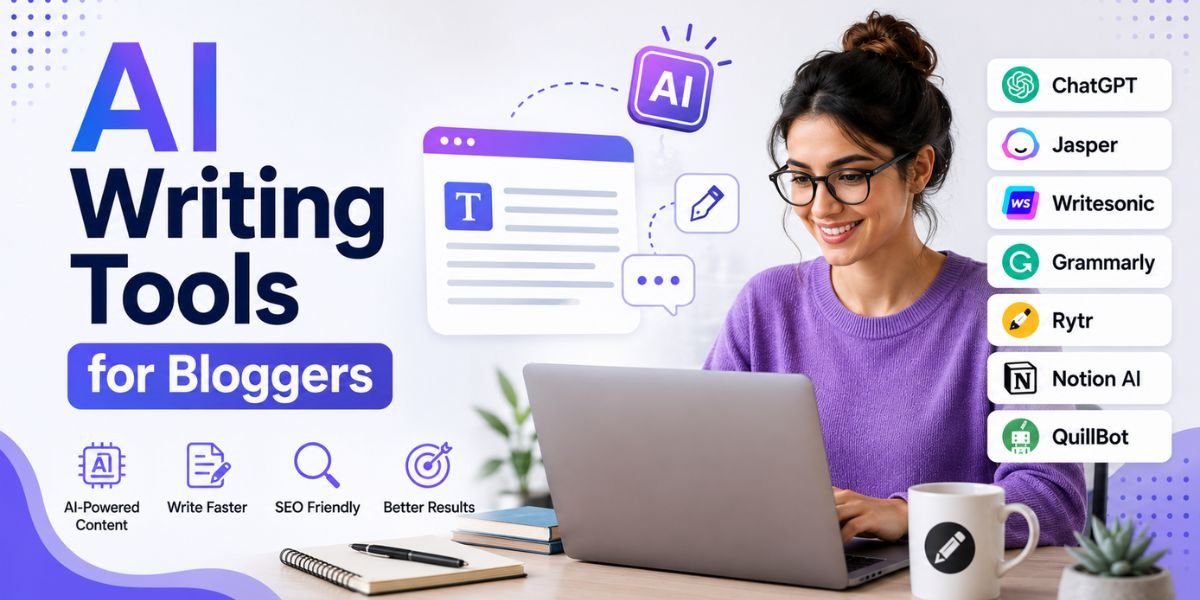
Different AI tools perform different tasks. Rather than relying on one platform for everything, I use specialised tools depending on the stage of the project.
Some categories include:
AI Writing Assistants
Writing assistants help create:
- Headlines
- Product descriptions
- Landing page copy
- Calls to action
- Frequently asked questions
- Meta descriptions
These tools speed up content creation while providing multiple wording options.
AI Design Tools
Design-focused AI tools assist with:
- Hero images
- Icons
- Backgrounds
- Mock-ups
- Colour suggestions
- Visual layouts
Although I still customise designs manually, AI provides an excellent starting point.
AI SEO Tools
SEO tools help identify:
- Target keywords
- Search intent
- Related phrases
- Content gaps
- Optimisation opportunities
Using AI during keyword research ensures that landing pages align with what users are actually searching for.
How I Use AI for Audience Research
Understanding the audience is the foundation of every successful landing page.
Instead of guessing what customers want, I ask AI to organise information about my target audience.
I typically research:
- Customer problems
- Common objections
- Buying motivations
- Frequently asked questions
- Emotional triggers
- Desired outcomes
For example, if I’m promoting accounting software, I ask AI questions like:
- What challenges do small business owners face?
- Why do businesses switch accounting software?
- What features matter most?
- What concerns prevent people from purchasing?
These answers help shape the messaging throughout the landing page.
Using AI to Identify Customer Pain Points
Every successful landing page solves a specific problem.
AI helps me identify the biggest pain points by analysing customer discussions, reviews, and frequently asked questions.
Some common pain points AI can uncover include:
- Saving time
- Reducing costs
- Improving productivity
- Increasing revenue
- Simplifying complicated tasks
- Eliminating manual work
Once these pain points are identified, I make sure every major section of the landing page addresses at least one of them.
Creating Better Headlines with AI
The headline is often the first thing visitors read.
If it fails to capture attention, the rest of the landing page may never be read.
AI helps generate dozens of headline ideas within seconds.
Rather than using the first suggestion, I usually generate multiple versions based on different approaches:
- Problem-focused
- Benefit-focused
- Question headlines
- Number headlines
- Curiosity-driven headlines
- Emotional headlines
For example:
Instead of:
“Best Accounting Software”
AI might suggest:
- Manage Your Business Finances Without the Stress
- Simplify Your Accounting in Less Time
- The Smarter Way to Handle Business Finances
- Save Hours Every Week with Automated Accounting
I then edit these suggestions to match my brand voice.
Writing the Hero Section with AI
The hero section is one of the most important areas of any landing page.
It normally includes:
- Headline
- Supporting text
- Call to action
- Hero image
I use AI to create several hero section variations before selecting the strongest option.
The supporting copy usually explains:
- The main problem
- The solution
- The biggest benefit
- Why visitors should continue reading
After AI creates the first draft, I personalise the language to make it more natural and persuasive.
Creating Benefit-Focused Copy
Many businesses spend too much time describing features.
Visitors are usually more interested in benefits.
Instead of saying:
“Includes automated reporting.”
I prefer:
“Save hours every month with automated financial reports.”
AI helps convert feature lists into benefit-driven copy.
For every feature, I ask:
“What problem does this solve?”
The answer becomes the benefit presented to the customer.
Using AI to Write Persuasive Calls to Action
A strong call to action encourages visitors to take the next step.
Rather than using generic buttons like:
- Submit
- Learn More
- Click Here
I ask AI to generate action-oriented alternatives.
Some examples include:
- Start Your Free Trial
- Get Instant Access
- Build Your Landing Page Today
- Grow Your Business Faster
- Save Time with AI
- Create Your First Campaign
- Boost Your Sales Now
Even small improvements to CTA wording can increase conversions.
Building Trust with AI

Visitors are unlikely to convert unless they trust your business.
AI helps generate ideas for trust-building content such as:
- Testimonials
- Customer success stories
- Frequently asked questions
- Guarantee sections
- Security information
- Industry statistics
While AI can draft these sections, I always replace placeholder testimonials with genuine customer feedback and verify any statistics before publishing.
Creating Strong Benefit Sections
Rather than presenting a long list of product features, I organise benefits into easy-to-read sections.
A typical structure includes:
Save Time
Explain how the product reduces repetitive work.
Increase Productivity
Show how users can accomplish more in less time.
Improve Accuracy
Highlight how automation reduces mistakes.
Reduce Costs
Demonstrate potential savings compared with manual processes.
Grow Faster
Show how the solution supports long-term business growth.
AI helps rewrite these benefits using different tones and styles while keeping the message focused on customer outcomes.
Improving Readability with AI
One of the biggest mistakes on landing pages is making the content too difficult to read.
After writing the first draft, I ask AI to improve readability by:
- Shortening long sentences
- Removing repetition
- Simplifying technical language
- Improving paragraph flow
- Making calls to action more direct
This editing stage usually improves user experience and keeps visitors engaged for longer.
Personalising the Final Copy
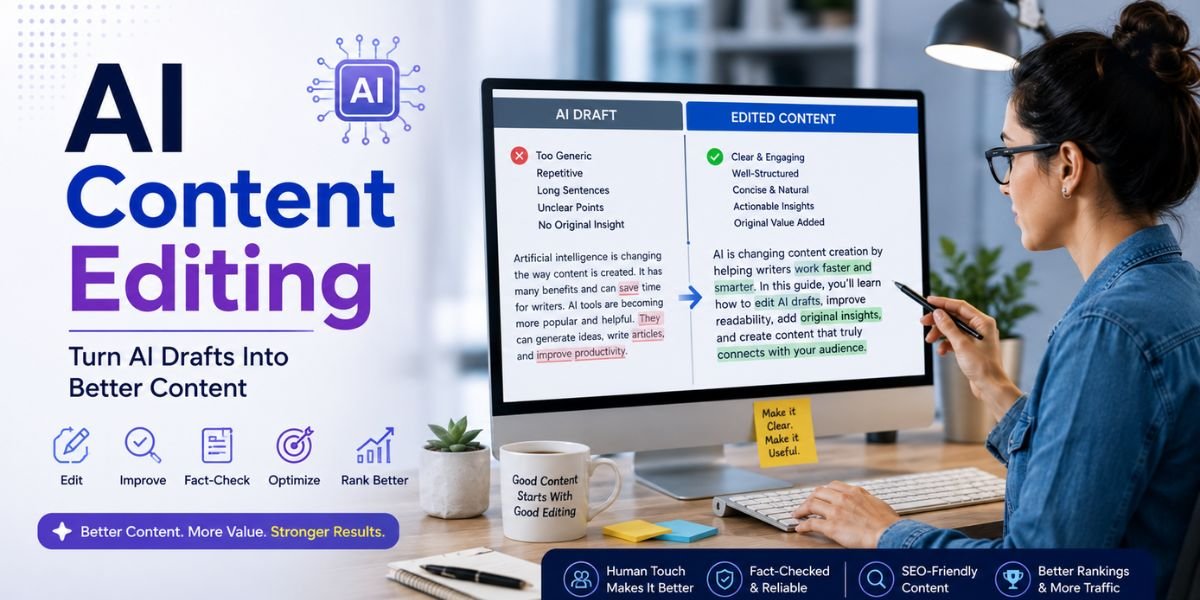
Although AI generates excellent first drafts, I never publish content without editing it.
I always:
- Add real examples
- Include personal experience
- Adjust the tone
- Improve transitions
- Verify facts
- Match the writing to my target audience
This final editing process ensures the landing page sounds authentic rather than completely AI-generated.
Using AI for Landing Page Design
Great copy alone is not enough to create a high converting landing page. Design plays an equally important role in capturing attention, building trust, and guiding visitors towards taking action. AI has become a valuable design assistant by helping generate layouts, colour schemes, visual elements, and design suggestions in a fraction of the time required by traditional methods.
When creating a landing page, I use AI to generate multiple design concepts before selecting the one that best matches my brand and target audience.
AI helps me create:
- Hero section layouts
- Feature sections
- Testimonial designs
- Pricing tables
- FAQ layouts
- Call-to-action sections
- Footer designs
Rather than copying the generated design exactly, I use it as inspiration and customise the final page to match my branding and marketing goals.
Creating AI-Generated Images
Visual content often determines whether visitors stay on a landing page or leave within a few seconds.
Instead of relying entirely on stock photography, I use AI image generators to create unique visuals that align with the message of the page.
Some examples include:
- Product mock-ups
- Office environments
- Business professionals
- Technology illustrations
- Dashboard previews
- Marketing graphics
- Social media previews
- Website hero images
Custom AI-generated visuals help make landing pages look more original while supporting the overall message.
Designing Better Hero Sections
The hero section is the first thing visitors notice, making it one of the most important conversion elements.
When designing hero sections with AI, I usually include:
- A bold headline
- A supporting subheading
- One primary call-to-action button
- A professional hero image
- Trust badges or customer ratings
- Plenty of white space
AI helps generate different layout variations, allowing me to test which structure attracts the most attention and encourages visitors to continue scrolling.
Using AI for Colour and Typography Suggestions
Colours influence how visitors feel when they interact with a landing page.
AI design tools often recommend colour combinations based on the type of business or product being promoted.
For example:
- Blue for trust and professionalism
- Green for finance, health, and sustainability
- Orange for strong call-to-action buttons
- Purple for creativity and technology
- Black for premium or luxury brands
AI also suggests font pairings that improve readability and create a more consistent visual identity across the page.
Improving SEO with AI
Search engine optimisation is essential if you want your landing page to attract organic traffic.
AI helps optimise content by identifying:
- Primary keywords
- Related search terms
- Semantic keywords
- Frequently asked questions
- Internal linking opportunities
- Meta descriptions
- Page titles
When writing landing pages, I naturally include my target keyword throughout the content while ensuring it fits smoothly into headings, paragraphs, image alt text, and metadata.
This improves both search engine visibility and user experience.
Optimising User Experience
A successful landing page should be easy to navigate and quick to understand.
AI helps evaluate readability and user experience by identifying:
- Long paragraphs
- Difficult language
- Weak headings
- Missing calls to action
- Inconsistent formatting
After reviewing AI suggestions, I simplify the content to make it easier for visitors to scan and understand within seconds.
How I Use AI for A/B Testing

No landing page is perfect after the first draft.
Testing different versions is one of the most effective ways to improve conversions.
AI helps generate multiple variations of:
Headlines
Testing different headlines allows me to identify which message attracts more clicks and engagement.
Calls to Action
Simple wording changes can have a noticeable impact on conversion rates.
For example:
Version A:
Start Your Free Trial
Version B:
Create Your Free Account Today
Version C:
Start Growing Your Business Now
AI generates dozens of CTA variations, making testing much easier.
Images
Different hero images often influence visitor behaviour.
I use AI to create multiple image concepts and compare which style performs best.
Page Layouts
AI can suggest alternative arrangements for:
- Benefits
- Testimonials
- Pricing tables
- FAQ sections
- CTA placement
Small layout improvements often increase user engagement.
AI Prompts I Use Every Day
The quality of AI output depends heavily on the prompt you provide. Over time, I have developed a collection of prompts that consistently produce useful results when building landing pages.
Here are some of my favourites.
Prompt for Audience Research
“Act as a digital marketing expert. Identify the target audience, biggest pain points, buying motivations, common objections, and desired outcomes for people searching for [product or service].”
Prompt for Headlines
“Generate 20 persuasive landing page headlines for [product] that focus on benefits, emotional triggers, and conversion.”
Prompt for Hero Copy
“Write a high-converting hero section with a headline, supporting paragraph, and strong call-to-action for [product or service].”
Prompt for Benefits
“Convert these product features into customer-focused benefits that explain how each feature solves a real problem.”
Prompt for FAQs
“Generate 15 frequently asked questions that customers may have before purchasing [product], along with clear and helpful answers.”
Using detailed prompts saves time and produces more relevant results.
Common Mistakes to Avoid
Although AI can dramatically improve productivity, there are several mistakes that can reduce the effectiveness of your landing page.
Publishing AI Content Without Editing
AI-generated content should always be reviewed for clarity, accuracy, and consistency before publishing.
Ignoring Customer Intent
A landing page should address the specific needs of your target audience rather than simply describing your product.
Writing Feature-Focused Copy
Visitors care more about results than technical specifications.
Always explain how your product benefits the customer.
Weak Calls to Action
Every landing page should include a clear and compelling call to action that tells visitors exactly what to do next.
Overloading the Page
Too much text, too many images, or multiple competing offers can distract visitors.
Keep the design clean and focused.
Forgetting Mobile Users
Most visitors now browse websites on smartphones.
Always test your landing pages on different screen sizes to ensure they remain easy to navigate and fast to load.
Best AI Tools for Landing Page Creation
Although many AI platforms are available, I regularly use different tools for specific tasks.
ChatGPT
Ideal for:
- Copywriting
- Headlines
- CTAs
- FAQs
- SEO content
- Brainstorming
Claude
Useful for:
- Long-form writing
- Editing
- Summarising
- Improving readability
Gemini
Helpful for:
- Research
- Data gathering
- Content ideas
- Search-based insights
AI Image Generators
Excellent for creating:
- Hero images
- Product mock-ups
- Marketing graphics
- Social media visuals
- Website banners
Canva AI
Useful for:
- Landing page graphics
- Icons
- Infographics
- Promotional banners
- Marketing materials
Using specialised AI tools for different tasks produces better results than relying on a single platform for everything.
FAQs:
Can AI build an entire landing page?
AI can generate headlines, copy, images, layouts, and design suggestions. However, reviewing and customising the final page is still important to ensure it matches your brand and marketing objectives.
Does AI improve conversion rates?
AI itself does not guarantee higher conversions. However, it can help create better headlines, stronger calls to action, clearer messaging, and improved user experiences that contribute to better performance.
Can beginners use AI for landing pages?
Yes. Most AI tools are beginner-friendly and require no coding or design experience. They can help users generate ideas, create content, and improve page structure more quickly.
Is AI-generated content good for SEO?
AI-generated content can perform well in search engines when it is original, accurate, helpful, and edited by a human. Focus on creating valuable content that satisfies user intent rather than relying solely on automation.
Should I rely entirely on AI?
No. AI works best as a creative assistant. Human expertise is still essential for strategy, branding, fact-checking, user experience, and conversion optimisation.
Must Read:
- AI Website Builder for Google AdSense
- AI Website Builder for Lead Generation
- AI Tools Every Web Designer Should Use
Final Thoughts:
Learning how I use AI to build high converting landing pages has completely changed my content creation process. Instead of spending days researching, writing, designing, and revising every section manually, I now use AI to accelerate each stage while maintaining control over the final result.
AI helps me research audiences, generate persuasive headlines, create engaging hero sections, write benefit-focused copy, design visuals, optimise content for SEO, and develop stronger calls to action. It also allows me to test multiple versions quickly, making it easier to identify what resonates with my audience.
That said, AI should never replace strategic thinking or human creativity. The highest-converting landing pages combine AI-powered efficiency with genuine customer understanding, real-world experience, and thoughtful editing. Every page I publish is reviewed, refined, and tailored to the audience before it goes live.
As AI technology continues to evolve, it will become an even more valuable tool for marketers, entrepreneurs, and businesses looking to create professional landing pages faster and more efficiently. The key is to use AI as a productivity partner while ensuring that every landing page delivers real value, builds trust, and encourages visitors to take action.