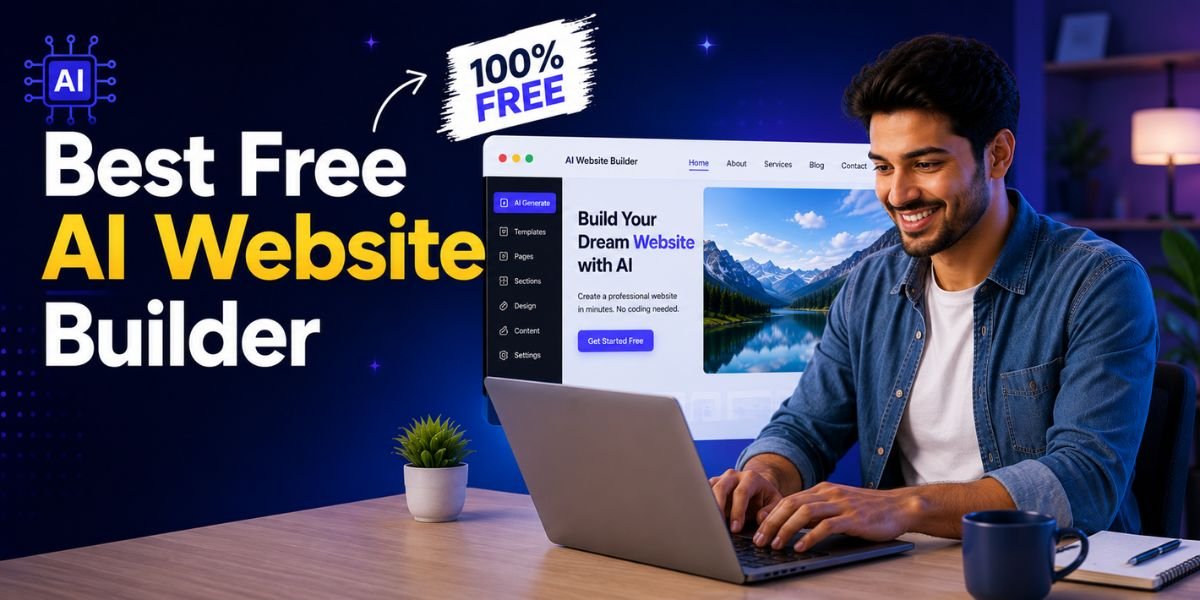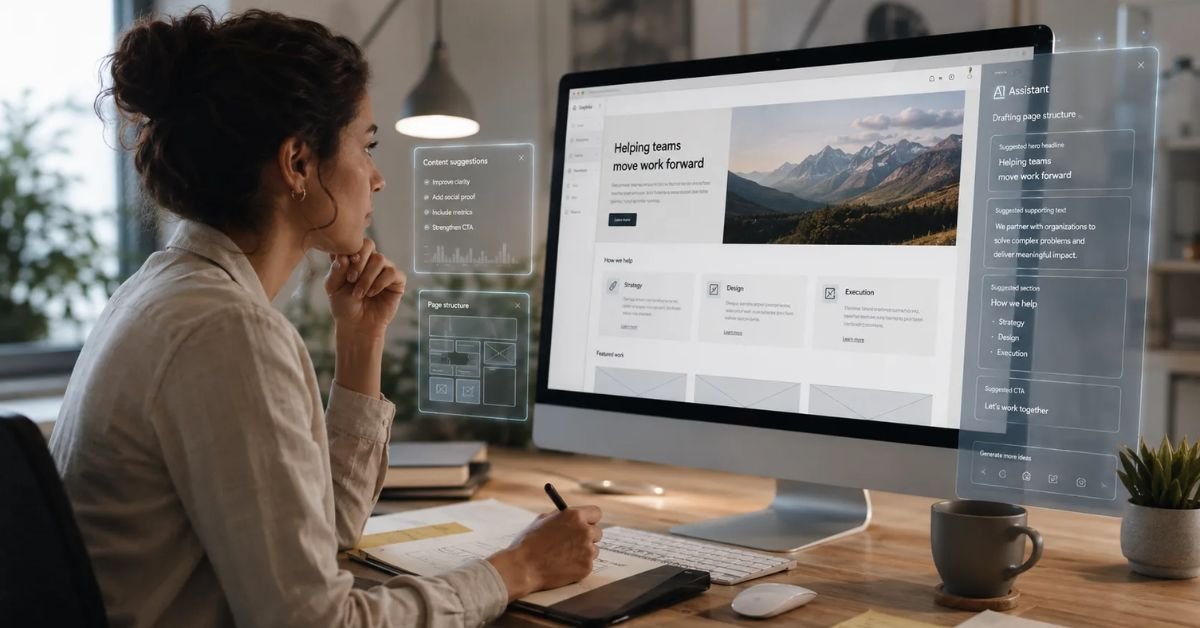
Yes, AI can design a website from a simple prompt, and this has become one of the most useful developments in modern website creation. AI website builders can understand natural language instructions and turn a short description into a website structure, layout, content, images, navigation, and sometimes functional elements.
For example, you could enter a prompt such as, “Create a modern website for a digital marketing agency with a homepage, services section, testimonials, blog, and contact form.” An AI-powered website builder may use that information to generate a complete starting website.
However, there is an important difference between generating a website from a prompt and creating a successful website for a real business. AI can handle many design and development tasks, but the final website still needs human review, customization, testing, SEO optimization, and ongoing improvement.
Understanding can AI design a website from a simple prompt is useful for entrepreneurs, bloggers, marketers, freelancers, small businesses, and anyone who wants to build a website without extensive coding knowledge.

How Can AI Design a Website From a Prompt?
AI website builders use artificial intelligence to interpret the instructions provided by the user.
Instead of manually selecting every component, users can describe their requirements in natural language.
For example, a prompt could say:
“Build a clean and professional website for a local fitness studio. Include a homepage, class schedule, membership plans, trainer profiles, customer reviews, FAQs, and a contact form. Use a modern design with a strong call-to-action.”
The AI analyzes the instructions and creates a website concept based on them.
Depending on the platform, the result may include:
- Homepage layout
- Navigation menu
- Website sections
- Headlines
- Text content
- Images
- Buttons
- Contact forms
- Service sections
- Pricing tables
- Blog sections
- Footer
- Mobile-responsive layouts
The website generated from the prompt becomes a starting point that you can customize.
What Information Should You Include in an AI Website Prompt?
The quality of an AI-generated website depends heavily on the quality of the prompt.
A vague prompt such as “Make me a website” gives the AI very little information.
A more detailed prompt can produce a much more relevant result.
When asking AI to create a website, consider including:
- Business type
- Website purpose
- Target audience
- Main services
- Products
- Brand style
- Preferred colors
- Required pages
- Important features
- Call-to-action
- Content style
- Mobile requirements
For example:
“Create a professional website for a digital marketing agency targeting small businesses. Include Home, About, Services, Case Studies, Blog, and Contact pages. Use a clean modern layout, strong typography, white background, and a blue accent color. The primary CTA should be ‘Get a Free Consultation.’ Make the design responsive and SEO-friendly.”
This gives the AI a much clearer direction.
Can AI Create the Entire Website?
AI can create a large portion of a website, but the exact capabilities depend on the AI website builder.
Some platforms can generate only the visual structure.
Others can generate complete websites that include:
- Design
- Content
- Images
- Navigation
- Forms
- Responsive layouts
- SEO settings
- Hosting
- Domain connections
More advanced platforms may also generate functional components and code.
However, “complete website” does not necessarily mean “finished website.”
A generated website may still need:
- Brand customization
- Content editing
- Fact checking
- Image replacement
- SEO optimization
- Performance testing
- Mobile testing
- Accessibility checks
- Analytics setup
- Conversion optimization
Therefore, when asking can AI design a website from a simple prompt, the practical answer is yes, but human review remains important.
AI Can Generate Website Layouts
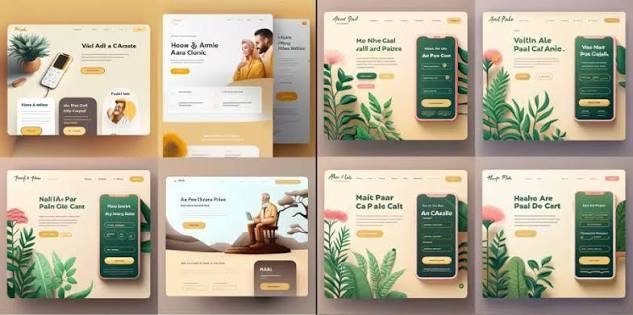
One of the strongest capabilities of AI website builders is layout generation.
AI can determine which sections may be appropriate for a particular business.
For example, an online software company may need:
- Hero section
- Product features
- Benefits
- Screenshots
- Integrations
- Pricing
- Testimonials
- FAQs
- Sign-up CTA
A restaurant may need:
- Hero image
- Menu
- About section
- Location
- Opening hours
- Reviews
- Reservation CTA
A freelancer may need:
- Introduction
- Portfolio
- Services
- Testimonials
- About
- Contact
AI can use the business context to create an initial structure instead of requiring the user to design everything manually.
AI Can Generate Website Content
AI can also generate the text used throughout a website.
This can include:
- Headlines
- Subheadings
- Service descriptions
- Product descriptions
- About page content
- FAQs
- Button text
- Blog categories
- Calls to action
For example, if you tell AI that your business provides SEO services to small businesses, it can suggest a headline, supporting text, service descriptions, and CTA options.
However, AI-generated content should be reviewed carefully.
Website content needs to accurately represent your business and provide useful information to visitors.
Generic AI-generated text can make a website feel similar to thousands of other websites.
Adding your own expertise, examples, customer stories, and brand voice can make the content more useful and distinctive.
AI Can Generate Website Images
Modern AI tools can also assist with visual content.
Depending on the platform, AI may generate or recommend:
- Hero images
- Illustrations
- Background graphics
- Product concepts
- Icons
- Marketing visuals
- Decorative elements
This is useful for small businesses that do not have access to a professional designer or photographer.
However, AI-generated images are not appropriate for every situation.
For example, a real business selling a physical product should generally use accurate product photography when customers need to see the actual product.
AI images can support the design, but they should not misrepresent products or services.
Can AI Create a Responsive Website?
Yes, many AI website builders can create responsive layouts.
Responsive design means the website adapts to different screen sizes.
A page might appear with several columns on desktop but change into a single-column layout on a smartphone.
AI can help adjust:
- Text sizes
- Images
- Columns
- Buttons
- Navigation
- Spacing
- Sections
However, generated responsive layouts should still be tested.
A website that looks good in an AI preview may behave differently on real devices.
Check your website on smartphones, tablets, laptops, and larger screens before publishing it.
Can AI Design an SEO-Friendly Website?
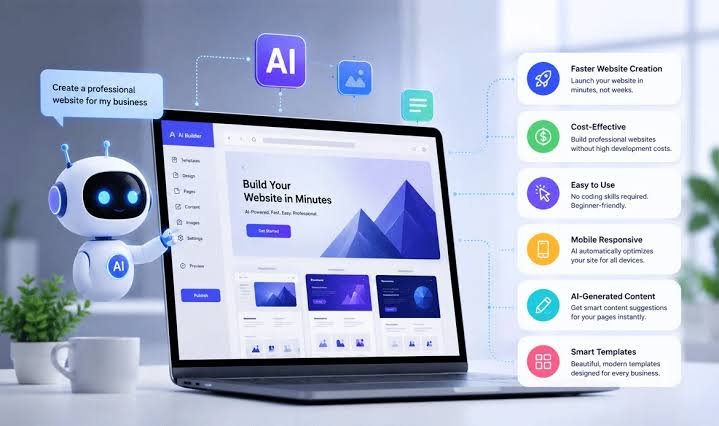
AI can help create an SEO-friendly website structure, but it cannot guarantee search engine rankings.
AI website builders may help with:
- Page titles
- Meta descriptions
- Heading structures
- URLs
- Image alt text
- Internal links
- Sitemap creation
- Content organization
- Keyword suggestions
A website can also be structured around specific topics and search intent.
For example, if you are building a website about AI website builders, AI can help suggest categories such as:
- AI Website Builder Reviews
- Website Design
- Website Development
- AI Tools
- Website Builder Comparisons
However, SEO requires more than adding keywords.
Successful SEO also depends on content quality, website performance, technical structure, user experience, internal linking, authority, and relevance.
Can AI Design a Website Without Coding?
Yes, this is one of the biggest reasons AI website builders have become popular.
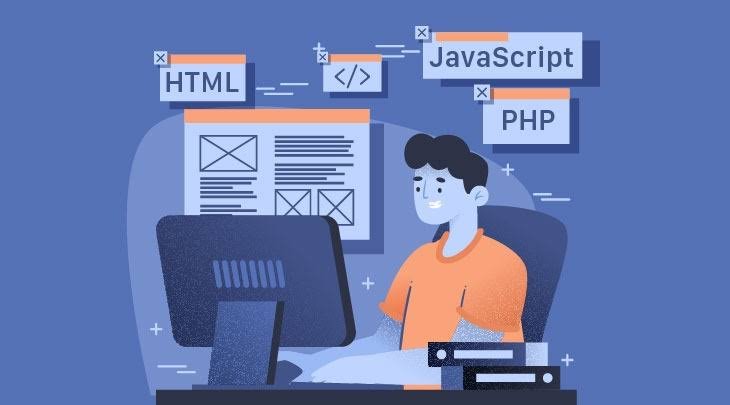
Traditional website development can require knowledge of:
- HTML
- CSS
- JavaScript
- PHP
- Databases
- APIs
- Web hosting
AI website builders can hide much of this technical complexity.
Users can describe what they want and then edit the generated website visually or through additional prompts.
This makes website creation accessible to beginners.
Someone who has never written code can potentially create a basic business website without hiring a developer.
Can AI Add Website Features?
AI website builders can add various features depending on the platform.
These may include:
- Contact forms
- Newsletter forms
- Blog systems
- Booking features
- Product catalogs
- E-commerce sections
- Pricing tables
- Testimonials
- FAQ sections
- Image galleries
- Social media links
Some advanced tools can also generate custom components or code.
However, complex functionality may still require professional development.
For example, a custom marketplace, advanced customer dashboard, enterprise application, or complex payment system may require more than an AI-generated website.
Can AI Build an E-Commerce Website From a Prompt?
AI can help create the structure of an e-commerce website from a prompt.
You could provide instructions such as:
“Create an online store for a skincare brand with a modern design, product categories, featured products, customer reviews, product detail pages, shopping cart, and checkout.”
An AI-powered platform may generate a suitable store structure.
However, running an e-commerce business requires additional work.
You still need to configure:
- Products
- Prices
- Inventory
- Payment methods
- Shipping
- Taxes
- Returns
- Customer support
- Legal policies
- Security
AI can accelerate the setup, but business operations still need human management.
Can AI Design a Blog From a Simple Prompt?
Blogging is another area where AI website builders can be helpful.
A prompt could be:
“Create a modern technology blog focused on AI tools, website builders, software reviews, and digital marketing. Include categories, search, newsletter signup, featured articles, popular posts, and a clean mobile-friendly design.”
The AI can create the initial structure.
For bloggers, important features include:
- Easy article publishing
- Categories
- Tags
- Search
- Internal linking
- SEO settings
- Author profiles
- Related posts
- Image management
- Analytics
- Monetization options
Before choosing an AI website builder, bloggers should make sure the platform can handle long-term content growth.
Can AI Improve an Existing Website?
AI is not limited to creating new websites.
It can also help improve existing websites.
You can provide AI with information about your current website and ask it to identify possible improvements.
For example:
“Review this homepage and suggest improvements to the navigation, hero section, CTA, content structure, and mobile experience.”
AI may identify:
- Weak headlines
- Confusing navigation
- Long paragraphs
- Poor CTA placement
- Missing trust signals
- Unnecessary sections
- Design inconsistencies
This can help website owners find opportunities for improvement.
AI Website Design and Personalization
AI can also help create more personalized website experiences.
For example, an e-commerce website can use AI to recommend products based on visitor behavior.
A content website can recommend articles related to what a visitor has already read.
A software website could show different onboarding information based on the user’s selected plan.
Personalization can improve relevance, but it should be implemented carefully.
Businesses need to consider privacy, consent, security, and transparency when collecting and using customer data.
AI Website Design vs Traditional Website Development
The main difference between AI website design and traditional development is the workflow.
Traditional development often involves:
- Planning
- Wireframes
- Design
- Development
- Content
- Testing
- Deployment
AI can shorten several of these stages.
A user can provide a prompt, receive a design, make changes through natural language, and then refine the result.
However, traditional development still provides more control for complex projects.
A professional developer can create custom functionality that may not be possible within an AI website builder.
The two approaches are not necessarily competitors.
Developers can also use AI to speed up their own workflows.
Advantages of Designing a Website With AI
There are several advantages to using AI for website design.
Faster Development
AI can create an initial website structure quickly.
Lower Barrier to Entry
Beginners can create websites without advanced coding knowledge.
Easy Experimentation
You can generate multiple layouts and design concepts.
Content Assistance
AI can help create initial website copy.
Design Ideas
AI can suggest colors, typography, layouts, and visual styles.
Rapid Prototyping
Businesses can test website ideas before investing heavily in development.
Easy Changes
Some AI platforms allow users to modify websites through natural language instructions.
Limitations of AI Website Design
AI website design also has limitations.
Generic Designs
AI may generate layouts that resemble common website templates.
Limited Customization
Some platforms restrict advanced design and functionality.
Incorrect Information
AI can produce inaccurate content.
Technical Problems
AI-generated code may contain errors or security issues.
Lack of Business Context
AI may not fully understand your customers or internal business processes.
Human Review Is Required
A generated website should be checked before publication.
These limitations do not make AI website builders ineffective. They simply mean that AI works best as part of a broader website development process.
How to Write a Better Prompt for Website Design
If you want better results, make your prompt specific.
A useful website prompt can include five important elements.
1. Website Type
Tell the AI what you are building.
Example:
“Create a website for a digital marketing agency.”
2. Target Audience
Explain who will use the website.
“Target small and medium-sized businesses.”
3. Website Goal
Explain the desired action.
“The primary goal is to generate consultation requests.”
4. Required Pages
List the pages.
“Include Home, About, Services, Case Studies, Blog, and Contact.”
5. Design Style
Describe the visual direction.
“Use a clean, modern, professional design with simple typography and strong CTA buttons.”
A detailed prompt gives the AI more context and usually produces a better starting point.
Example AI Website Design Prompt
Here is an example of a detailed prompt:
“Create a professional website for a digital marketing agency that helps small businesses increase online visibility. The website should include Home, About, Services, Case Studies, Blog, and Contact pages. Use a clean modern design with a white background, dark text, and blue accents. Create a strong hero section with a clear headline and ‘Get a Free Consultation’ CTA. Include services, testimonials, case studies, FAQs, and a newsletter signup. Make the design mobile-responsive, SEO-friendly, fast-loading, and easy to navigate.”
This type of prompt gives an AI website builder enough information to create a more useful initial design.
What Should You Do After AI Generates the Website?
The generated website should be treated as version one.
Start by reviewing every page.
Check the:
- Logo
- Brand colors
- Fonts
- Headlines
- Images
- Navigation
- CTAs
- Contact information
- Forms
- Links
- Mobile layout
- SEO settings
Then replace generic content with real business information.
Add original photographs, customer testimonials, case studies, product details, and other information that makes the website unique.
Next, test the website on different devices and browsers.
Finally, connect analytics and monitor how visitors interact with the website.
Can AI Replace Web Designers and Developers?
AI can automate many website creation tasks, but that does not mean designers and developers are no longer valuable.
Professionals are still needed for:
- Complex websites
- Custom applications
- Advanced integrations
- Technical architecture
- Security
- Performance optimization
- Custom user experiences
- Advanced databases
- Enterprise systems
AI is more likely to change the role of web professionals than eliminate it.
Designers and developers who know how to use AI effectively can complete repetitive tasks faster and spend more time on strategic and creative work.
The Future of Prompt-Based Website Design
Prompt-based website design is likely to become increasingly common.
Instead of manually editing individual elements, users may increasingly describe changes using natural language.
For example:
“Make the homepage more suitable for mobile visitors.”
“Move the testimonials below the services section.”
“Create a new landing page for our SEO service.”
“Change the CTA to focus on booking a free consultation.”
AI can interpret these instructions and modify the website accordingly.
This could make website management much easier for non-technical users.
Must Read:
- How AI Is Changing Website Design in 2026?
- Best AI Website Builders for Bloggers in 2026
- How to Use AI to Improve Your Website Design?
Final Thoughts:
So, can AI design a website from a simple prompt? Yes, modern AI website builders can turn simple instructions into website layouts, content structures, images, navigation, and functional components.
The technology has made website creation much faster and more accessible. Beginners can create websites without extensive coding knowledge, while experienced designers and developers can use AI to accelerate their workflows.
However, the best results come from using AI as a starting point rather than expecting it to make every decision.
A successful website still needs a clear business goal, useful content, strong branding, good SEO, mobile responsiveness, accessibility, fast performance, and ongoing testing.
The future of website design is not simply about AI creating websites automatically. It is about combining AI automation with human creativity, strategy, experience, and judgment.
If you provide AI with a clear and detailed prompt, review the generated result carefully, and customize it around your audience and business, you can use AI to create a professional website much faster than traditional methods alone.