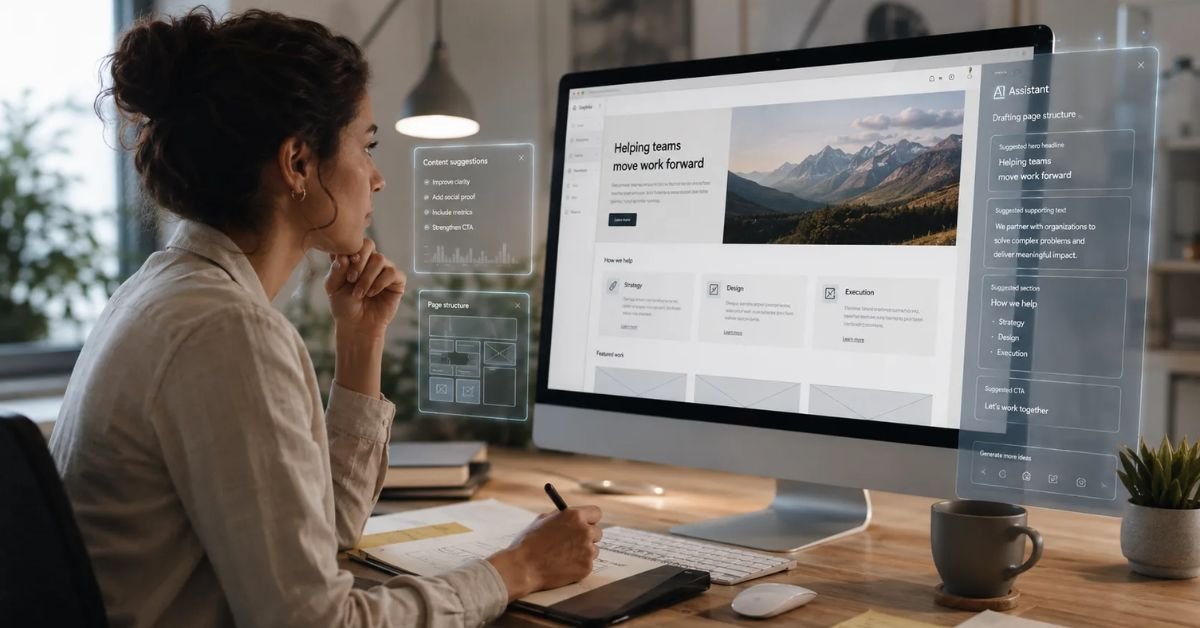
Blogging has changed significantly in recent years. In 2026, bloggers no longer need to spend days learning complicated website development tools before publishing their first article. AI website builders can help create a blog structure, generate page layouts, improve content organization, create visuals, and simplify many technical tasks.
Choosing the best AI website builders for bloggers in 2026 depends on more than how quickly a platform can create a homepage. Bloggers need a website that supports publishing, SEO, mobile responsiveness, fast loading, categories, internal linking, analytics, monetization, and long-term content growth.
An AI website builder can be particularly useful for beginners, affiliate marketers, niche website owners, freelancers, content creators, and businesses that want to publish regularly without depending on a developer for every small change.
In this guide, we will look at what makes an AI website builder useful for blogging, the features you should consider, and some of the strongest options to evaluate in 2026.

What Is an AI Website Builder for Bloggers?
An AI website builder uses artificial intelligence to simplify website creation and management. Instead of manually designing every page, users can describe what they want and allow the platform to generate a starting point.
For bloggers, this can include:
- Blog layouts
- Homepage designs
- Category pages
- About pages
- Contact pages
- Content sections
- Images
- SEO suggestions
- Navigation menus
- Responsive layouts
- Website copy
- Basic branding
The best AI website builders for bloggers in 2026 should make it easy to publish content while still giving you control over important SEO and website settings.
AI is useful during the initial website setup, but blogging is a long-term activity. Your chosen platform should continue to work well after publishing your first 10, 50, or 500 articles.
Why Bloggers Are Using AI Website Builders
One of the biggest reasons bloggers are turning to AI website builders is speed.
Creating a website traditionally involves choosing hosting, installing a CMS, selecting a theme, configuring plugins, designing pages, and setting up essential settings.
AI can simplify many of these steps.
A beginner may be able to describe a website concept and receive a basic design within minutes. The blogger can then customize the branding, create categories, add content, and begin publishing.
AI can also help bloggers brainstorm article ideas, create outlines, improve headlines, generate images, and optimize certain on-page elements.
However, AI should support the blogging process rather than replace original expertise and useful content.
What Should Bloggers Look for in an AI Website Builder?
Before choosing among the best AI website builders for bloggers in 2026, consider the features that will affect your website over the long term.
Easy Content Publishing
A blogging platform should make publishing simple.
You should be able to create articles, edit content, add images, format headings, insert links, and publish updates without unnecessary technical work.
If publishing a simple article requires complicated steps, managing a large blog can become frustrating.
SEO Features
SEO is extremely important for bloggers who want organic traffic.
Look for features that allow you to control:
- Page titles
- Meta descriptions
- URLs
- Headings
- Image alt text
- Internal links
- XML sitemaps
- Canonical settings
- Indexing controls
- Schema options
An AI website builder may provide SEO assistance, but you should still have enough control to optimize your content manually.
Mobile Responsiveness
Your blog should work properly on smartphones, tablets, and desktop computers.
The website should automatically adjust:
- Text size
- Images
- Navigation
- Columns
- Buttons
- Spacing
- Content width
Always test your blog on mobile devices before publishing it widely.
Page Speed
Bloggers often publish content containing images, videos, advertisements, affiliate elements, and tracking scripts.
Too many resources can slow down a website.
When evaluating an AI website builder, look for good hosting infrastructure, image optimization, caching options, and performance controls.
A visually impressive blog is not useful if visitors have to wait too long for pages to load.
WordPress With AI Tools

WordPress remains one of the most flexible choices for bloggers because it provides extensive control over content, design, plugins, themes, SEO, and monetization.
AI can be integrated into a WordPress workflow through various plugins and external tools.
For bloggers, WordPress can provide:
- Advanced content management
- Thousands of themes
- Large plugin ecosystem
- SEO tools
- E-commerce support
- Affiliate marketing support
- Customization
- Analytics integrations
- Advertising options
- Membership functionality
The biggest advantage is flexibility.
The biggest disadvantage is that WordPress can require more setup and maintenance than an all-in-one AI website builder.
For serious bloggers who expect their website to grow substantially, WordPress remains an option worth considering.
Wix AI Website Builder
Wix combines website building with AI-assisted tools.
It can help users create website structures and customize pages without requiring extensive coding knowledge.
For bloggers, Wix can be useful when the goal is to create a visually polished website without dealing with technical hosting management.
Wix provides tools for:
- Blog publishing
- Website design
- Templates
- SEO settings
- Mobile optimization
- Domain management
- Analytics
- Business features
It can be particularly suitable for lifestyle bloggers, personal brands, freelancers, and small businesses that combine blogging with services.
Before committing, bloggers should review the platform’s publishing and SEO capabilities to make sure they match their long-term content strategy.
Hostinger AI Website Builder
Hostinger’s AI website builder is designed for users who want to create websites without extensive technical knowledge.
AI can help generate website structures and content based on user instructions.
For bloggers, an all-in-one platform can be attractive because hosting and website creation are handled within the same ecosystem.
Potentially useful features include:
- AI website generation
- Hosting
- Templates
- Blog functionality
- SEO tools
- Website editing
- Domain integration
- Performance features
It may be a good choice for beginners who want to create a website without managing separate hosting and development systems.
However, bloggers should compare content management features, SEO control, pricing, and migration options before making a long-term decision.
Squarespace
Squarespace is known for its design-focused website experience.
For bloggers who care heavily about visual presentation, it can be an appealing option.
It can work well for:
- Travel blogs
- Photography blogs
- Lifestyle websites
- Personal brands
- Creative portfolios
- Business blogs
Its templates can provide a polished starting point without requiring extensive design experience.
Bloggers should still evaluate the platform based on their specific SEO, content organization, monetization, and customization requirements.
Webflow With AI-Assisted Workflows

Webflow is aimed more toward users who want greater design control.
It can provide detailed control over layouts, responsive design, animations, CMS structures, and website interactions.
For advanced bloggers, agencies, designers, and businesses, Webflow can offer a powerful environment.
However, Webflow has a steeper learning curve than simpler website builders.
If your main goal is publishing articles quickly, a simpler platform may be more convenient.
If design flexibility and custom presentation are major priorities, Webflow may be worth considering.
Framer
Framer has become popular among designers and users who want modern websites with strong visual presentation.
Its AI-assisted workflow can help generate website concepts and content structures.
For bloggers, Framer may be useful for personal brands, design blogs, startup websites, and creative publications.
Its biggest appeal is its design experience.
However, bloggers should carefully compare its content management, SEO, monetization, and long-term publishing capabilities against platforms designed specifically around content management.
10Web
10Web combines WordPress with AI-assisted website creation.
This approach can be interesting for bloggers who want WordPress functionality while using AI to speed up website creation.
AI can help generate a website structure and provide a starting point that can then be customized.
The combination can be useful for bloggers who want:
- WordPress flexibility
- AI-assisted website creation
- SEO functionality
- Custom plugins
- Blog publishing
- Greater control over content
The exact features and pricing can change, so check the current plan before choosing it for a long-term blog.
Durable
Durable is designed around AI-powered website creation and is aimed primarily at small businesses and entrepreneurs.
It can generate a basic website quickly and assist with content.
It may work well for someone who wants a simple business blog or service website.
However, dedicated bloggers should evaluate the depth of the content management system before selecting a platform.
If your primary goal is publishing hundreds of SEO-focused articles, the CMS and SEO features are more important than simply generating the initial website.
AI Website Builders for Affiliate Bloggers
Affiliate bloggers have specific requirements.
An affiliate website may contain:
- Product reviews
- Comparison articles
- Buying guides
- Product tables
- Affiliate links
- Disclosure pages
- Categories
- Search functionality
- Images
- SEO content
The best AI website builders for affiliate bloggers should make it easy to create and organize large amounts of content.
You should also have control over links and tracking.
If you plan to publish hundreds of product-related articles, look beyond AI website generation and evaluate the platform’s CMS, internal linking, taxonomy, SEO controls, page speed, and monetization options.
AI Website Builders for Niche Bloggers
Niche blogs focus on specific topics such as:
- Technology
- Travel
- Health
- Finance
- Food
- Fashion
- Fitness
- Education
- Business
- Home improvement
AI website builders can help create a website structure that fits a specific niche.
For example, a travel blog might use categories such as:
- Destinations
- Travel Tips
- Hotels
- Budget Travel
- Food
- Travel Guides
A technology blog may need:
- Reviews
- Tutorials
- Comparisons
- Software
- AI
- News
The ability to create custom categories and organize content is therefore essential.
How AI Can Help Bloggers Create Content

AI website builders are only one part of the larger AI blogging ecosystem.
AI can help bloggers with:
- Topic research
- Content outlines
- Headline ideas
- FAQ ideas
- Content editing
- Grammar improvements
- Meta descriptions
- Image concepts
- Internal linking suggestions
However, automatically publishing large amounts of generic AI-generated content is not a strong long-term strategy.
Successful blogging requires useful information, original insights, accurate facts, good examples, and content that actually helps readers.
Use AI as an assistant while keeping editorial control.
AI Website Builder vs Traditional Website Builder
Traditional website builders generally rely on templates and visual editors.
AI website builders add another layer of automation.
Instead of manually choosing a template and changing every section, you may be able to describe your website and let AI generate a starting design.
The major difference is the amount of automation.
Traditional builders:
- Choose template
- Customize sections
- Add content
- Adjust design
AI builders:
- Describe website
- Generate structure
- Customize result
- Add content
- Refine with AI
Both approaches can work.
AI simply makes the initial process faster.
How to Choose the Best AI Website Builder for Blogging
There is no universal winner among the best AI website builders for bloggers in 2026.
Use this checklist before making your decision.
1. Check the CMS
Can you easily create and organize hundreds of articles?
2. Check SEO Control
Can you edit important SEO elements yourself?
3. Check Performance
Does the platform provide fast loading pages?
4. Check Mobile Design
Does your website look good on smartphones?
5. Check Monetization
Can you use advertisements, affiliate links, sponsorships, and other revenue sources?
6. Check Analytics
Can you connect analytics and understand your traffic?
7. Check Customization
Can you modify your website as your brand grows?
8. Check Migration
Can you move your content elsewhere if you eventually change platforms?
9. Check Pricing
Consider both the initial cost and long-term cost.
10. Check Support
Reliable support can be valuable if you encounter technical problems.
AI Website Builder Features That Matter Most in 2026
The best AI website builders for bloggers in 2026 should offer more than automatic website generation.
Look for a platform that combines AI assistance with strong fundamentals.
Important features include:
- AI website generation
- Easy CMS
- SEO controls
- Responsive design
- Fast hosting
- Image optimization
- Custom domains
- Analytics
- Blogging tools
- Content organization
- Flexible templates
- Integrations
- Security
- Backups
- Easy editing
AI is useful, but these basic website features remain essential.
Common Mistakes Bloggers Make With AI Website Builders
One common mistake is choosing a platform solely because it can create a website quickly.
The initial website is only the beginning.
Your blog may eventually contain hundreds of pages.
Another mistake is ignoring SEO settings until after publishing dozens of articles.
Bloggers should establish a strong structure from the beginning.
Other common mistakes include:
- Publishing low-quality AI content
- Ignoring page speed
- Using too many plugins or scripts
- Poor internal linking
- Weak navigation
- No content categories
- Not optimizing images
- Ignoring mobile visitors
- Failing to create backup strategies
- Choosing a platform that is difficult to migrate from
Think about the next few years, not just the first day.
Which AI Website Builder Is Best for You?
The best choice depends on your blogging goals.
For beginners: Look for an easy AI website builder with hosting and simple editing.
For serious SEO bloggers: Look for strong CMS functionality and detailed SEO control.
For affiliate bloggers: Focus on content organization, performance, link management, and monetization.
For creative bloggers: Prioritize design flexibility and visual presentation.
For business bloggers: Choose a platform that supports both content and business functionality.
For advanced users: Consider platforms that provide greater customization and integration options.
Must Read:
- How to Use AI to Improve Your Website Design?
- AI Website Builder vs Web Developer: Which Is Better?
- How to Create an AI-Powered Business Website?
Final Thoughts:
The best AI website builders for bloggers in 2026 are not necessarily the platforms that generate a website in the fewest seconds. The better choice is the platform that helps you build, manage, optimize, and grow a useful blog over time.
AI can make website creation much easier. It can generate layouts, suggest content structures, assist with design, create images, and reduce the technical barrier for beginners.
But your blogging strategy still matters.
Choose a platform that provides strong SEO controls, reliable hosting, good performance, mobile responsiveness, flexible content management, and the ability to monetize your website.
For beginners, an AI website builder can be an excellent way to start blogging without hiring a developer. For experienced bloggers, AI can speed up workflows while still allowing them to maintain control over their content and website.
The most important goal is not simply to create a website. It is to build a website that readers enjoy using, search engines can understand, and your business can continue to grow with for years to come.