Building an online store used to require technical knowledge, expensive developers, and weeks of design and development work. Today, artificial intelligence is changing that process. The Best AI Website Builders for Ecommerce Stores can help entrepreneurs create product pages, design storefronts, write product descriptions, generate images, organize content, and launch an online shop with much less effort.
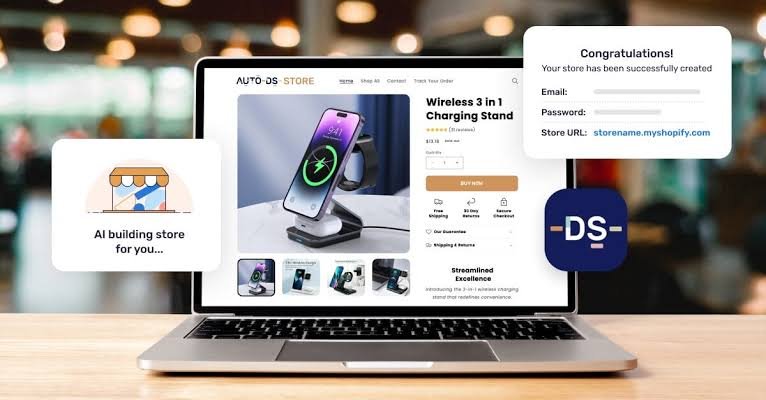
For small businesses, startups, creators, and established brands, AI website builders offer a faster way to create an ecommerce website. Instead of starting with a blank page, you can describe your business, select your preferred style, add products, and let AI generate much of the initial website structure.
However, not every AI website builder is designed for ecommerce. A good ecommerce platform needs more than an attractive homepage. It should support product catalogs, shopping carts, secure payments, inventory management, mobile optimization, SEO, analytics, marketing integrations, and a smooth checkout experience.
This guide explores the Best AI Website Builders for Ecommerce Stores, what features you should look for, how AI can simplify ecommerce website creation, and which type of platform may be right for your business.
What Are AI Website Builders for Ecommerce?
AI ecommerce website builders combine traditional website-building tools with artificial intelligence. Instead of manually creating every section, users can provide instructions about their business and allow AI to generate website layouts, content, images, product descriptions, and other elements.
The Best AI Website Builders for Ecommerce Stores are designed to reduce the amount of technical work required to launch an online shop.
For example, an entrepreneur selling handmade jewelry could tell an AI website builder that they need a modern ecommerce store with product categories, a shopping cart, customer reviews, a contact page, and a minimalist design. The platform can then generate a starting website that the owner can customize.
AI does not completely replace ecommerce strategy. You still need to choose products, set prices, manage orders, understand your customers, and create an effective marketing strategy. However, AI can make the website creation process considerably faster.
Why Use AI to Build an Ecommerce Store?
The biggest advantage of using AI is speed. Traditional website development can involve designers, developers, copywriters, SEO specialists, and other professionals. AI can assist with many of these tasks from a single platform.
The Best AI Website Builders for Ecommerce Stores can help with several important areas.
Faster Website Creation
AI can generate a basic ecommerce website in minutes rather than requiring you to build every page manually.
You can provide information about your business, target customers, products, preferred design, and brand style. The AI then uses that information to create an initial website structure.
This is especially useful for new businesses that want to test an ecommerce idea quickly.
AI-Generated Content
Writing product descriptions for dozens or hundreds of products can take considerable time. AI can generate initial descriptions based on product information.
You can then edit the content to match your brand voice and ensure that product information is accurate.
The Best AI Website Builders for Ecommerce Stores may also help create homepage copy, category descriptions, FAQs, promotional messages, and other website content.
Easier Design
Not everyone understands web design principles. AI can recommend layouts, colors, fonts, sections, and visual structures based on the type of business you operate.
This makes professional-looking ecommerce websites more accessible to beginners.
Less Technical Work
Many AI website builders use visual editors and automated tools, allowing users to make changes without writing code.
You can modify sections, add products, change images, update text, and customize pages through a user-friendly interface.
Features to Look for in an AI Ecommerce Website Builder
Choosing between the Best AI Website Builders for Ecommerce Stores requires more than comparing AI features.
An ecommerce website needs reliable business functionality.
Product Management
A strong ecommerce builder should make it easy to add and organize products.
Important product management features include:
- Product titles
- Product descriptions
- Product images
- Product categories
- Product variants
- Pricing
- Stock levels
- SKU management
- Product tags
- Discounts
If you have a large product catalog, efficient product management becomes even more important.
Shopping Cart
The shopping cart is one of the most important parts of an ecommerce website.
Customers should be able to add products, update quantities, remove items, and review their purchases before checkout.
A complicated or confusing cart can cause customers to abandon their purchases.
Secure Checkout
The checkout process should be simple and trustworthy.
Look for platforms that support reliable payment solutions and secure transactions. Depending on your target market, you may need support for credit cards, debit cards, digital wallets, bank transfers, or regional payment methods.
Mobile Optimization
A large percentage of ecommerce traffic comes from smartphones.
Your online store should work properly across mobile phones, tablets, and desktop computers.
The Best AI Website Builders for Ecommerce Stores should automatically generate responsive layouts that adapt to different screen sizes.
SEO Features
Search engine optimization is essential for ecommerce businesses that want organic traffic.
Useful SEO features include:
- Custom page titles
- Meta descriptions
- SEO-friendly URLs
- Image alt text
- Heading controls
- Sitemap support
- Structured data
- Mobile-friendly pages
- Fast-loading pages
AI can also assist with creating SEO-focused content, but you should always review automatically generated text before publishing it.
Best AI Website Builders for Ecommerce Stores
There are several platforms worth considering when building an AI-powered online store. The right option depends on your products, budget, technical experience, and growth plans.
Shopify
Shopify is one of the most established ecommerce platforms and is widely used by businesses ranging from small online stores to large brands.
Its ecosystem includes ecommerce themes, apps, payment options, marketing tools, inventory features, and integrations.
Shopify has also introduced AI-powered features that can assist merchants with tasks such as writing product descriptions and creating marketing content.
For businesses that want a dedicated ecommerce platform with a large ecosystem, Shopify can be a strong option.
Wix
Wix combines website building with ecommerce functionality and AI-powered website creation.
Its AI tools can help users generate website designs and content based on their requirements.
Wix can be useful for small businesses, freelancers, creators, and entrepreneurs who want a website and online store within the same platform.
The visual editor also provides considerable design flexibility.
Hostinger Website Builder
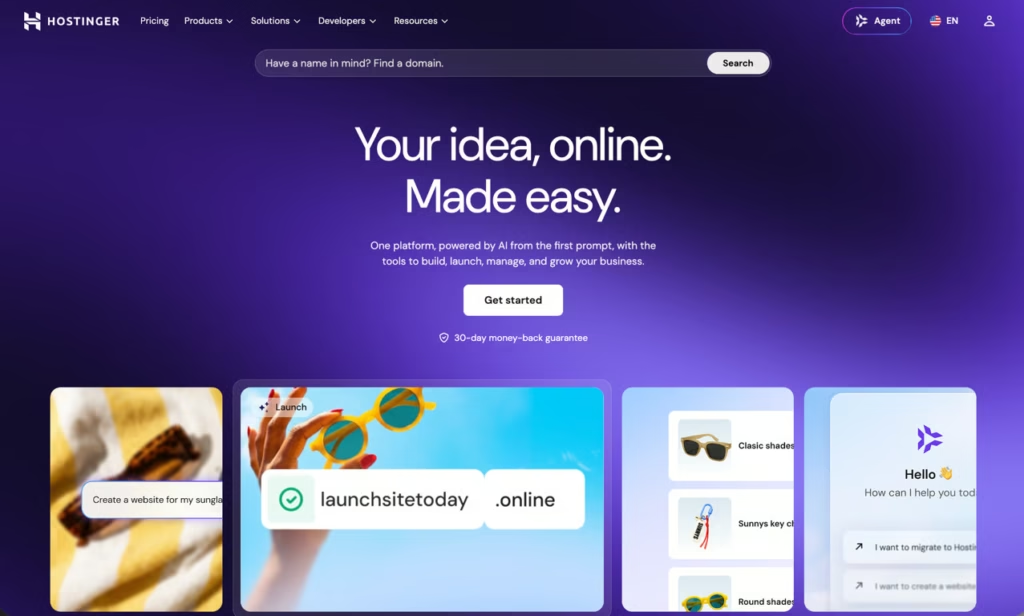
Hostinger’s website builder uses AI to simplify website creation. Users can provide information about their business and generate a website structure with AI-assisted content and design features.
For entrepreneurs who want an affordable entry point, Hostinger can be worth considering.
Its AI tools can help with website text, images, branding, and other content creation tasks.
Squarespace
Squarespace is known for its polished templates and design-focused approach.
It can be particularly attractive for businesses where branding and visual presentation are important.
Its ecommerce capabilities allow businesses to sell products and manage an online storefront while maintaining a professional website design.
For fashion, beauty, photography, creative products, and lifestyle brands, Squarespace can be an appealing choice.
10Web
10Web uses AI technology to help users create WordPress websites.
The platform can generate websites based on prompts and provides tools designed to simplify WordPress website creation.
Businesses that want the flexibility of WordPress while using AI-assisted website creation may find 10Web interesting.
However, users should consider their hosting, plugin, maintenance, and ecommerce requirements before choosing a WordPress-based solution.
Durable
Durable is designed to make website creation extremely simple.
Its AI system can generate a website based on information about your business.
While it can be useful for creating a basic business website quickly, ecommerce users should carefully review its available store functionality before choosing it for a larger online shop.
How to Choose the Right AI Ecommerce Website Builder
The Best AI Website Builders for Ecommerce Stores are not necessarily the same for every business.
Your ideal platform depends on what you sell and how you plan to grow.
For Beginners
Beginners should prioritize simplicity.
Look for an AI website builder with:
- Easy setup
- Drag-and-drop editing
- AI-generated designs
- Simple product management
- Built-in ecommerce tools
- Payment integration
- Customer support
The easier the platform is to manage, the less time you will spend dealing with technical problems.
For Small Businesses
Small businesses often need a balance between affordability and functionality.
Consider the monthly price, transaction fees, ecommerce features, marketing integrations, SEO tools, and scalability.
A cheap platform is not necessarily the best option if it lacks features that your business will need later.
For Growing Brands
Growing ecommerce brands need scalability.
Look for:
- Large product catalogs
- Inventory management
- Advanced analytics
- Marketing integrations
- Customer accounts
- Multiple payment methods
- Shipping integrations
- App ecosystems
- SEO controls
The Best AI Website Builders for Ecommerce Stores should allow your website to grow without forcing you to rebuild the entire store.
How AI Can Improve Ecommerce Product Pages
Product pages play a major role in ecommerce conversions.
A strong product page should clearly explain what the product is, why customers need it, how it works, and what makes it different.
AI can help generate initial product descriptions, headlines, bullet points, FAQs, and promotional copy.
For example, instead of writing every description manually, you could provide product specifications and ask the AI to create a customer-friendly description.
However, AI-generated content should always be reviewed.
Avoid publishing generic descriptions that do not provide useful information. Your product content should accurately describe the product and provide details customers need before purchasing.
AI and Ecommerce SEO
SEO can help ecommerce stores generate long-term organic traffic.
The Best AI Website Builders for Ecommerce Stores can simplify some parts of SEO, but successful ecommerce SEO still requires a good strategy.
Start with keyword research.
Identify the phrases your potential customers use when searching for products. Then optimize product pages, category pages, blog content, image alt text, titles, and descriptions.
For example, instead of creating a generic product page called “Blue Shoes,” a store might target a more specific search phrase such as “men’s blue running shoes.”
AI can help generate content around these topics, but keyword selection should be based on real search demand and customer intent.
AI-Generated Images for Ecommerce Stores
Images are extremely important for online shopping because customers cannot physically examine products.
AI image tools can help businesses create banners, backgrounds, promotional graphics, lifestyle visuals, and other marketing assets.
However, product images should accurately represent the actual product.
Do not use AI-generated images that make a product appear significantly different from what customers will receive.
Trust is critical in ecommerce.
AI Chatbots and Customer Support
AI can also improve the customer service experience.
An AI chatbot can answer common questions about:
- Shipping
- Returns
- Product availability
- Store policies
- Order information
- Product specifications
This can reduce the number of repetitive questions handled manually.
For more complicated issues, the chatbot should allow customers to reach a human support representative.
Common Mistakes When Using AI for Ecommerce
AI can save time, but it should not be used without human oversight.
Publishing Generic AI Content
One common mistake is publishing AI-generated content without editing it.
Product descriptions should sound natural and provide real information about the product.
Ignoring SEO
Creating a website with AI does not automatically mean that the website will rank on Google.
SEO requires keyword research, useful content, technical optimization, internal linking, quality backlinks, and a good user experience.
Choosing a Platform Only Because It Has AI
AI features are useful, but ecommerce functionality should come first.
A platform may have impressive AI tools but lack important features such as inventory management, payment options, integrations, or scalability.
Forgetting Mobile Users
Always test your website on smartphones.
Check menus, product images, buttons, checkout forms, product variants, and page speed.
Not Checking AI-Generated Information
AI can produce incorrect information.
Always verify product specifications, prices, policies, shipping information, and other important details before publishing.
How to Build an Ecommerce Website With AI
Creating an AI-powered ecommerce website can be broken into several simple stages.
Step 1: Define Your Business
Start by identifying what you sell and who your customers are.
Define your products, target market, pricing strategy, brand personality, and primary goals.
Step 2: Select an AI Website Builder
Compare the Best AI Website Builders for Ecommerce Stores based on ecommerce features, pricing, payment options, design flexibility, SEO capabilities, and scalability.
Step 3: Generate the Initial Website
Provide the AI builder with information about your business.
Explain the type of store you want, your preferred design style, target audience, products, and important pages.
Step 4: Add Your Products
Upload product images, descriptions, prices, categories, variants, and inventory information.
Review every product listing carefully.
Step 5: Configure Payments
Connect your preferred payment methods and test the checkout process.
Make sure customers can complete an order without unnecessary steps.
Step 6: Optimize for Search Engines
Create optimized titles, descriptions, URLs, product content, category pages, and useful blog posts.
Add internal links between related pages.
Step 7: Test Your Store
Before launching, test:
- Mobile responsiveness
- Desktop design
- Product search
- Shopping cart
- Checkout
- Payment processing
- Contact forms
- Navigation
- Page speed
- Broken links
Step 8: Launch and Promote
Once everything works correctly, launch your store.
You can then promote it through SEO, social media, email marketing, paid advertising, influencer marketing, and other channels.
Are AI Website Builders Good for Ecommerce?

Yes, AI website builders can be an excellent choice for ecommerce, particularly for entrepreneurs who want to launch quickly.
The biggest advantage is that AI reduces the amount of manual work involved in creating a website.
However, the quality of your ecommerce business will depend on much more than the website builder.
Your products, pricing, branding, customer service, marketing, website speed, checkout experience, and customer trust all influence ecommerce success.
The Best AI Website Builders for Ecommerce Stores should therefore be viewed as tools that help you build and manage your online presence rather than complete replacements for ecommerce strategy.
Must Read:
- How AI Is Changing Website Design and Development?
- Best AI Website Builders for Agencies and Freelancers
- How to Build an E-commerce Website With AI?
Final Thoughts:
The ecommerce industry is becoming increasingly accessible to entrepreneurs because AI is reducing the technical barriers associated with creating websites.
The Best AI Website Builders for Ecommerce Stores can help businesses create storefronts, generate content, organize products, improve design, and launch online stores faster.
Shopify can be attractive for businesses focused heavily on ecommerce, while Wix and Squarespace can appeal to businesses that want a combination of website design and online selling. Hostinger can be useful for entrepreneurs looking for an affordable AI-assisted website-building experience, while 10Web can be interesting for businesses that prefer WordPress.
Before choosing a platform, consider your product catalog, budget, payment requirements, SEO strategy, design preferences, technical skills, and long-term growth plans.
Most importantly, do not choose an ecommerce platform simply because it has AI features. Look at the complete package. A successful online store needs reliable ecommerce functionality, fast performance, mobile optimization, secure payments, strong SEO, useful content, and a smooth customer experience.
When these elements work together, AI can become a powerful tool for turning an ecommerce idea into a professional online store.